
THE EVOLUTION OF FEAR
Why your nervous system can’t tell a predator from a push notification

Last night, a woman told me she hadn’t slept properly in days. She wasn’t in danger. She wasn’t sick. Nobody she loved was under threat. She was sitting in her living room in North America, thousands of miles from the nearest conflict zone — and she was paralyzed.
“It’s Iran,” she said. “I can’t stop reading about it. I can’t stop watching. What if it escalates? What if it becomes something bigger?”
I didn’t dismiss her. I didn’t remind her that I was speaking to her from Bahrain with explosions rocking in the distance. I didn’t tell her to put her phone down and take a walk, though that would have helped. Instead, I asked a question that cuts through the noise faster than almost anything else:
When did you last feel this kind of fear about something you could actually do something about?
She thought about it for a long time.
She couldn’t remember.
Fear Is a Gift
Here’s what I know about fear: it is one of the most sophisticated systems evolution has ever produced.
It’s fast — often faster than thought. It’s physical — heart rate up, senses sharpen, body mobilised. It is, in every meaningful sense, a gift. A system refined over millions of years by every ancestor who survived long enough to pass their genes forward.
Every one of your ancestors was afraid at exactly the right moment. That’s why you’re here.
But here’s what that system was built for: immediate, physical, present-tense danger. A predator. A rival. A cliff edge. A stranger’s aggressive posture. Danger that was close, real, and actionable — danger you could run from, fight, hide from, or warn your tribe about.
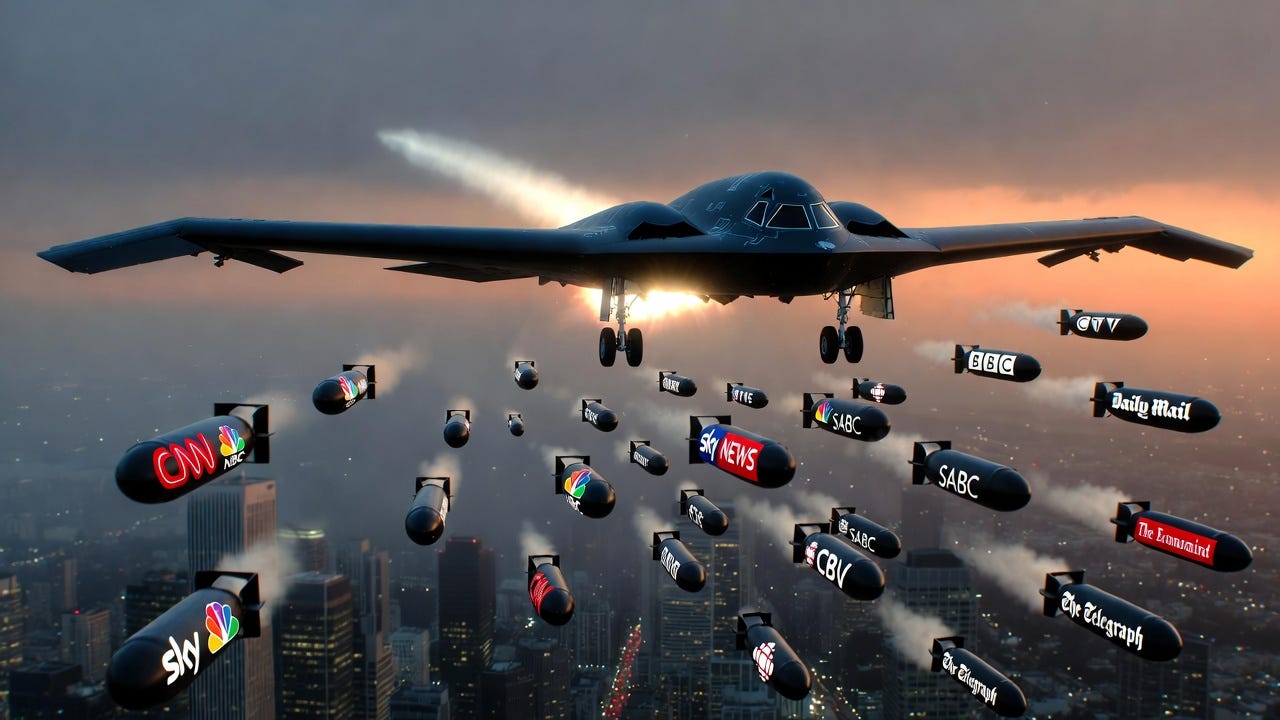
It was not built for a 24-hour news cycle broadcasting curated catastrophe from every corner of the planet.
And it has absolutely no idea what to do with an uninvited push notification.
The Gift of Fear
Gavin de Becker, the security expert and author of The Gift of Fear, spent decades studying how people respond to genuine threat. His central argument is as elegant as it is unsettling: real fear is almost always right.
Not anxiety. Not worry. Not the low-grade dread that hums beneath modern life. But the sudden, visceral, instinctive signal that something is genuinely wrong—that the man in the elevator is dangerous, that the situation you’re about to walk into should be avoided.
De Becker noticed something troubling, especially in women—though all of us do this in different ways: people had been conditioned to override the signal. To be polite. To not make a scene. To give the benefit of the doubt. And so they routinely talked themselves out of the very system designed to protect them.
The problem, he argued, wasn’t too much fear. It was too little trust in the right kind.
I think about his work often. Because what I see in my clients, in my community, and in the wider culture looks like the precise mirror image of the problem he described.
We aren’t ignoring fear. We’re drowning in it. But almost none of it is the kind de Becker was talking about.
The Most Intelligent Thing in the Room
A client asked me, a few weeks ago during the Stop It Summit, a behavior cessation workshop I host, and said she wanted to stop feeling afraid.
“Of what?” I asked.
“Of my ex-boyfriend.”
She described it carefully, almost apologetically. The way she tensed when she heard a car that sounded like his. The way she checked the locks twice before bed. The way she’d changed her route to work. The way he felt afraid even to post on social media.
She thought something was wrong with her. She wanted the feeling gone.
But the more she spoke, the more I found myself thinking the opposite of what she expected.
I didn’t want to help her stop feeling fear. I wanted to help her understand that her fear was the most intelligent thing in the room.
Her nervous system had assessed the situation with more accuracy than her conscious mind was willing to accept. It wasn’t malfunctioning. It wasn’t being dramatic. It wasn’t just anxiety.
It was delivering a message:
Pay attention. Take action. This is real.
The goal wasn’t to silence the alarm. The goal was to act on it.
The Loop
Now contrast that with the woman who hadn’t slept in eleven days because of Iran.
Her fear system was also firing—loudly, persistently, physically. But there was nothing to run from. Nothing to fight. No action that would resolve the threat. She couldn’t negotiate a ceasefire. She couldn’t protect anyone. She couldn’t do anything except consume more information—which her nervous system, wired for resolution, kept demanding in the hope that this article, this update, this expert opinion would finally deliver the certainty it was chasing.
It never does.
Fear creates uncertainty. Uncertainty craves resolution. Resolution requires information. Information — when it resolves nothing — creates more fear.
It’s a loop. Self-sustaining. And it runs on your nervous system’s oldest reflex.
News organizations didn’t invent this. But it’s hard to ignore how effectively modern media has learned to benefit from it—how reliably fear keeps attention and how attention keeps people coming back. It is very profitable. For them.
Your amygdala is not watching the news. It is being watched by the news.
This Is the Evolution Gap
A system built for the savannah—immediate, local, actionable danger—is being fed a continuous stream of global, distant, unresolvable threats. And it responds exactly as it was designed to: with full activation, full alertness, and full mobilization.
For days. For months. For years.
The result isn’t vigilance. It’s exhaustion.
A nervous system that cries wolf too often, for threats too far away and too unresolvable, will eventually do one of two things: stay chronically activated — or go numb. And a numb fear system, as de Becker would tell you, is a genuinely dangerous one. Because when the real signal finally arrives, you’ve trained yourself to ignore it.
The ex-boyfriend’s car outside the window. The colleague whose behaviour has quietly shifted. The room your gut has been trying to flag for weeks.
You stop listening.
Fear Literacy
I’m not arguing for ignorance. The world is complicated, and staying broadly informed is reasonable and adult.
But there’s a difference between being informed and being consumed.
There’s a difference between noting that a geopolitical situation is developing and spending eleven nights in neurological emergency over events you cannot influence.
And there is a profound, important, potentially life-saving difference between the fear that tells you to leave the room and the fear that a headline manufactured to keep you scrolling.
One deserves your full attention and immediate action. The other deserves to have your phone placed face down on the table.
So here is a simple test—fear literacy in two questions:
Is this danger close, real, and actionable? If yes: act. If no, limit your exposure—because your biology will keep demanding resolution from a situation that cannot provide it.
Your fear isn’t broken.
It is being stolen.
This piece draws on themes explored in depth in The Gap: A Survival Guide for Modern Civilization and The WildFit Way. If this resonated, consider sharing it with someone who needs to hear it.
Love it Eric! If it's close, real, and actionable then act.
I gave up really paying attention to the news over 10 years ago because I felt all they were doing was selling bad news and a depressing world.
This is excellent. The distinction between actionable fear and ambient fear is something more people need to understand. From a physiological standpoint, this is a classic evolutionary mismatch. The threat system was built for immediate, local danger that requires action. It assumes activation will be followed by movement. When there is no action, the system stays on.
That state is metabolically expensive. Sustained sympathetic activation without resolution becomes wear and tear. Over time it shifts toward chronic hyperarousal or helplessness, neither of which is adaptive. Fear literacy may be one of the most important modern skills. Knowing when to mobilize and when to disengage protects both clarity and health.